Structural engineering for hospitals, clinics, medical office buildings, and pharmaceutical facilities, designed to meet the elevated code requirements healthcare demands.
[ healthcare-detail-1.jpg ]Healthcare facilities are not standard commercial buildings. The codes are stricter, the review process is longer, the mechanical systems are heavier, and the consequences of getting it wrong are measured in patient safety, not just dollars.
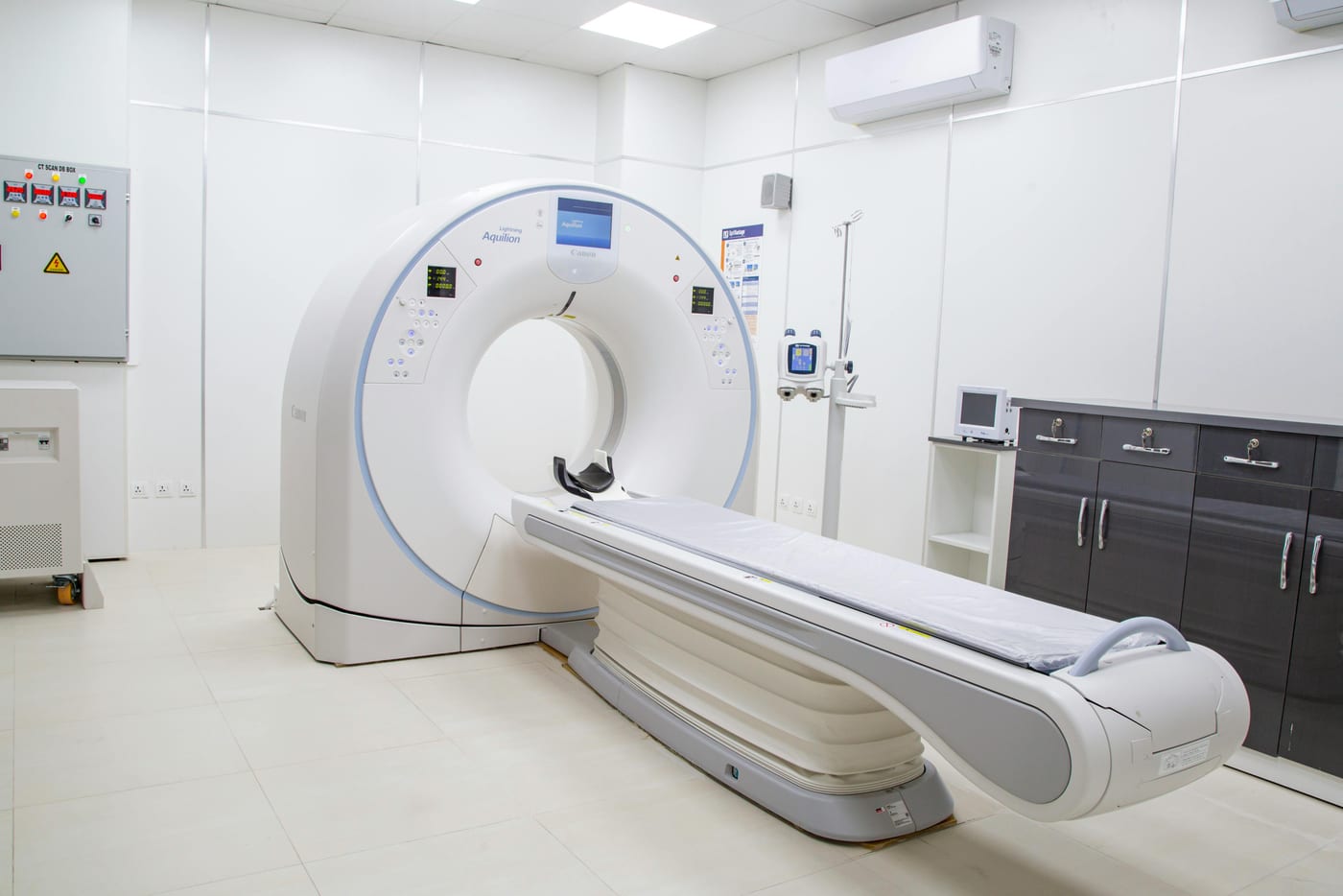
We provide structural engineering for hospitals, urgent care clinics, surgical centers, imaging facilities, pharmaceutical labs, and medical office buildings. Our work accounts for the unique loading conditions healthcare buildings present: heavy MRI equipment with strict vibration limits, radiation shielding walls that weigh three times what normal partitions weigh, elevated floor live loads for patient transport corridors, and rooftop mechanical systems that seem to multiply with every renovation.
Beyond the structural design itself, healthcare projects require navigation through regulatory review processes that commercial projects never see. Depending on the state, your drawings may need review by OSHPD, HFAP, The Joint Commission, or a state health department plan review office, each with their own submission requirements, timelines, and comment cycles.
Every healthcare facility type carries its own structural demands. A freestanding emergency department has different seismic performance requirements than a medical office building. A pharmaceutical cleanroom needs vibration criteria that a general clinic doesn't. We tailor the structural approach to match the specific facility classification and its intended use.
Why healthcare structural engineering is fundamentally different from standard commercial work.
Hospitals with emergency departments and surgical facilities are classified as Risk Category IV under ASCE 7. This means an Importance Factor of 1.5 for seismic design. The structure must be designed to remain operational after a design-level earthquake, not just prevent collapse.
The Facility Guidelines Institute (FGI) publishes design and construction requirements adopted by most states. These go beyond IBC and address everything from minimum floor-to-floor heights that affect structural depth, to vibration criteria for imaging rooms, to specific corridor width requirements that constrain column placement.
In many states, healthcare projects bypass local building departments entirely. California's OSHPD (now HCAI), Texas HHSC, and similar agencies conduct their own plan review with stricter standards and longer review cycles. Submission packages must be thorough. Incomplete applications restart the clock.
Standard office floors are designed for 50 psf live load. Hospital patient rooms require 40 psf minimum, but corridors serving patient areas jump to 80 psf. Operating rooms, mechanical spaces, and storage areas can require 100 to 150 psf. These variations create complex framing transitions within a single floor plate.
MRI and CT equipment manufacturers publish strict vibration criteria, often VC-C or VC-D on the vibration criterion curve. This means the structural floor system must limit velocity amplitudes to 4,000 or 2,000 micro-inches per second. Meeting this on upper floors of a multi-story building requires careful bay spacing, deeper beams, and sometimes isolated structural systems.
Large healthcare facilities may trigger progressive collapse design requirements, particularly those tied to government funding or VA projects. The structure must demonstrate the ability to bridge over a removed column without disproportionate collapse, requiring redundant load paths and enhanced connection detailing.
Structural engineering services tailored to the unique demands of healthcare construction and renovation.
Complete structural design for new acute care facilities, including foundations, superstructure, lateral systems, and coordination with all building trades.
Structural support for MRI, CT, linear accelerator, and PET equipment, including vibration analysis, shielding wall support, and equipment pit design.
Medical office buildings and outpatient clinics, from ground-up construction to tenant improvement buildouts within existing shells.
Structural modifications and additions to existing healthcare campuses. Phased construction that keeps adjacent departments operational during work.
Cleanroom structural support, vibration-sensitive lab floors, chemical-resistant foundation systems, and specialized containment structures.
Seismic evaluation and retrofit design for existing healthcare facilities to meet current code requirements and maintain operational continuity.